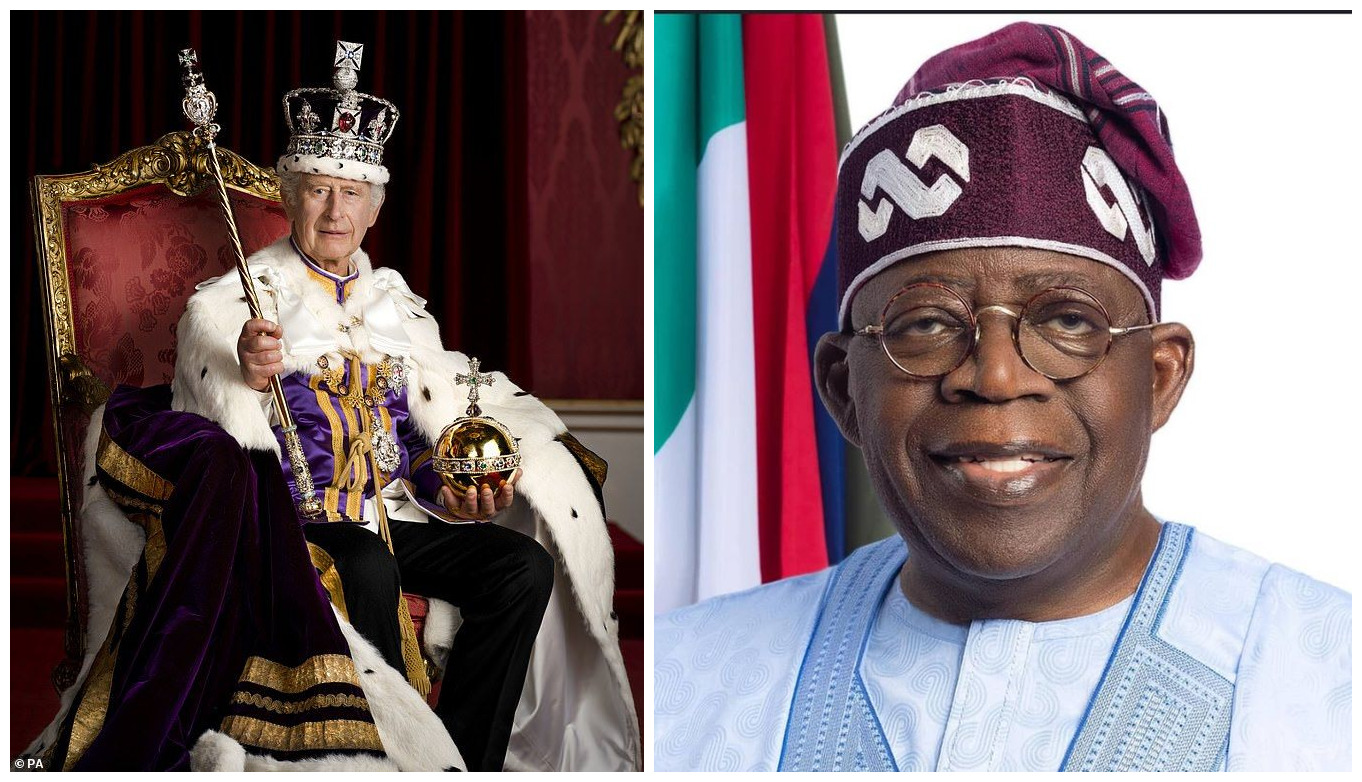
THE ESSENCE OF PRESIDENT TINUBU’S VISIT TO LONDON
The difficult and, in many respects, almost hopeless situation in which Nigeria finds itself today gives profound significance to the recent visit of President Bola Ahmed Tinubu to London. This visit is not merely ceremonial; it carries deep political, historical, and symbolic implications. It comes at a time when many observers, both within and outside the country, believe that Nigeria stands dangerously close to systemic failure.
It is important to note that this visit was reportedly undertaken in response to an invitation from His Royal Majesty, King Charles III. In diplomatic terms, such an invitation is not one to be taken lightly. To decline it—especially after previous unreciprocated engagements with other nations—would have been interpreted as a diplomatic slight, not only to the British monarchy but also to the many Nigerians residing in the United Kingdom. Beyond protocol, the timing of the invitation suggests a deeper concern on the part of Britain about the current state of Nigeria’s democracy and the increasing level of hardship faced by its citizens.
For many Nigerians, the invitation from King Charles III can be seen as a reflection of international awareness and concern regarding the country’s deteriorating conditions. Nigeria, once projected as the “Giant of Africa,” is today grappling with economic instability, insecurity, and widespread dissatisfaction among its people. These challenges are not sudden; they are the cumulative result of decades of leadership failures, policy inconsistencies, and missed opportunities since independence in 1960.
The author of this reflection recalls being 18 years old at the time Nigeria gained independence from British colonial rule. That independence was achieved peacefully, without the violent struggles that characterized the experiences of countries such as the United States. While this peaceful transition was widely celebrated, it raises an important question: has the ease with which independence was obtained contributed, in some way, to the challenges Nigeria faces today? Nations that fought fiercely for their independence often developed stronger institutions and a deeper sense of national responsibility. In contrast, Nigeria’s post-independence journey has been marked by instability and underdevelopment, despite its vast human and natural resources.
It is widely acknowledged that the global community has been observing Nigeria’s trajectory with increasing concern, and Britain, as the former colonial power, has a particular interest in the country’s stability. The actions of King Charles III may therefore be interpreted as an expression of diplomatic goodwill and a desire to contribute, even indirectly, to Nigeria’s recovery.
Britain itself remains one of the most stable democracies in the world. This stability is rooted in a strong culture of respect for democratic institutions, the rule of law, and a tradition of responsible governance. Even within a constitutional monarchy, the principles of humility, service, and accountability are upheld. These values stand in contrast to the challenges faced in many African countries, where governance is often undermined by personal interests, weak institutions, and insufficient accountability.
However, while leadership bears a significant portion of responsibility for Nigeria’s current condition, it would be incomplete to place the entire blame solely on those in power. Citizens also have a role to play. A nation’s success or failure is ultimately a reflection of the collective actions, values, and attitudes of its people. Therefore, Nigerians must engage in honest self-examination and consider how their own choices, behaviors, and expectations have contributed to the present reality.
In 2021, I wrote an article in my magazine, Gurara Herald, titled “The Destiny of Nigeria.” In that piece, I argued that the foundation upon which Nigeria was built was fundamentally weak—like a structure erected on shifting sand. This structural weakness, I suggested, was a major factor behind the country’s persistent struggles. Unfortunately, many of the concerns raised in that article have since materialized. It is important to understand that such analyses are not predictions meant to be fulfilled, but warnings intended to inspire corrective action. Regrettably, those warnings were not heeded, and the consequences are now evident.
Subsequent efforts to address Nigeria’s challenges have also yielded limited success. In 2024, I submitted a detailed 48-page document to former President Olusegun Obasanjo, addressing the growing problem of corruption and proposing possible solutions. This followed his own public expressions of concern and initiatives aimed at tackling the issue. However, events since then have shown little improvement; if anything, the situation appears to have worsened.
Earlier, around 2019, I had attempted to share similar ideas with former President Muhammadu Buhari through a mutual contact. It remains unclear whether the document was ever reviewed. These experiences highlight a recurring challenge in Nigeria: the gap between recognizing problems and taking decisive, sustained action to resolve them.
In light of these realities, the visit of President Tinubu to London assumes even greater importance. It provides an opportunity for constructive dialogue between Nigeria and the United Kingdom at the highest levels. King Charles III, following in the legacy of his late mother, Queen Elizabeth II, appears committed to fostering stability and cooperation within the Commonwealth and beyond. His invitation may be seen as part of a broader effort to encourage engagement, reflection, and collaboration.
The meeting between President Tinubu and British leaders, including the Prime Minister, offers a platform to exchange ideas, explore solutions, and strengthen bilateral relations. While no single visit can resolve decades of accumulated challenges, such engagements can serve as a starting point for renewed commitment and strategic thinking.
Ultimately, the future of Nigeria lies in the hands of its leaders and its people. External support and goodwill can assist, but meaningful change must come from within. It requires visionary leadership, responsible citizenship, and a collective determination to rebuild the nation on a stronger and more sustainable foundation.
It is our earnest hope and prayer that this visit will yield positive outcomes. May the Almighty grant wisdom to the leaders of both Nigeria and the United Kingdom, guiding them toward decisions that will bring lasting peace, stability, and prosperity. After more than six decades of independence marked by unfulfilled potential, Nigeria deserves a new chapter—one defined not by struggle, but by progress and shared national purpose.
-Editor of Gurara Voice