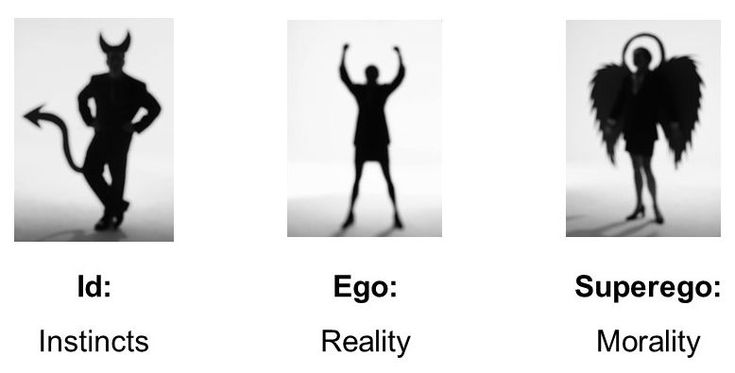
THE THREE DIMENSIONS OF PERSONALITY: THE ID, THE EGO, AND THE SUPEREGO
The renowned psychologist Sigmund Freud proposed that human personality is structured into three fundamental components: the Id, the Ego, and the Superego. These dimensions represent different forces within the human mind that shape behavior and character. Although they often develop alongside physical stages of growth—childhood, adolescence, and adulthood—their expression does not always strictly follow age. Many adults, for instance, may still be governed largely by impulses associated with earlier stages of development.
The Id: The Instinctive Nature (The “Animal Man”)
The Id represents the most primitive aspect of personality. It is present from birth and is driven by instinct, desire, and the pursuit of pleasure. At this level, the individual seeks immediate gratification, avoids pain at all costs, and pays little regard to social rules or moral standards.
This stage corresponds broadly with early childhood, where behavior is largely impulsive and self-centered. However, it is important to note that the Id is not inherently negative. It is the seat of basic survival instincts—such as hunger, self-defense, reproduction, and attachment. Within it are also noble qualities like maternal care, bravery, loyalty, and endurance.
The “animal man,” therefore, is not a derogatory term, but a description of a person primarily governed by instinct. Indeed, a large portion of humanity operates predominantly at this level, guided more by immediate needs and natural drives than by reflection or higher ideals.
The Ego: The Rational Self (The “Human Man”)
The Ego develops as the individual begins to interact with reality. It operates according to the “reality principle,” seeking to satisfy the desires of the Id in ways that are socially acceptable and practical. It is the decision-making part of the personality—the mediator between instinct and society.
This stage aligns with adolescence and maturity, where reasoning, planning, and social awareness begin to take shape. The “human man” is characterized by controlled self-interest. Unlike the purely instinct-driven individual, he is aware of societal expectations and adjusts his behavior accordingly.
At this level, self-expression becomes prominent. The individual seeks recognition, achievement, beauty, and influence. He becomes social, creative, and often ambitious. Yet, this stage is marked by fluctuation—capable of both good and bad, depending on influence and environment. Such individuals form the majority of society, shaping culture, institutions, and social life as we know it.
The Superego: The Moral Ideal (The “Idealistic Man”)
The Superego represents the highest level of personality development. It is guided not by impulse or self-interest, but by conscience, moral values, and a sense of higher purpose. It reflects what a person ought to be rather than what they desire to be.
The “idealistic man” is rare. He rises above personal gain and lives with a sense of responsibility toward others and the world at large. He is cooperative, selfless, and principled. Rather than seeking recognition, he is willing to share success, credit, and resources.
Such individuals are less attached to material possessions, status, or narrow identities such as tribe or nation. They are driven by a broader vision of humanity—what is often described as the “brotherhood of man.” They find little satisfaction in conflict, rivalry, or selfish ambition, and instead pursue peace, justice, and unity.
Conclusion
Freud’s model of the Id, Ego, and Superego provides a powerful framework for understanding human behavior. These three forces exist in all of us, constantly interacting and shaping our choices. The challenge of personal development lies in moving from mere instinct, through rational control, toward moral and spiritual maturity.
In essence, true growth is not just about becoming more intelligent or successful, but about becoming more conscious, more balanced, and ultimately, more selfless.