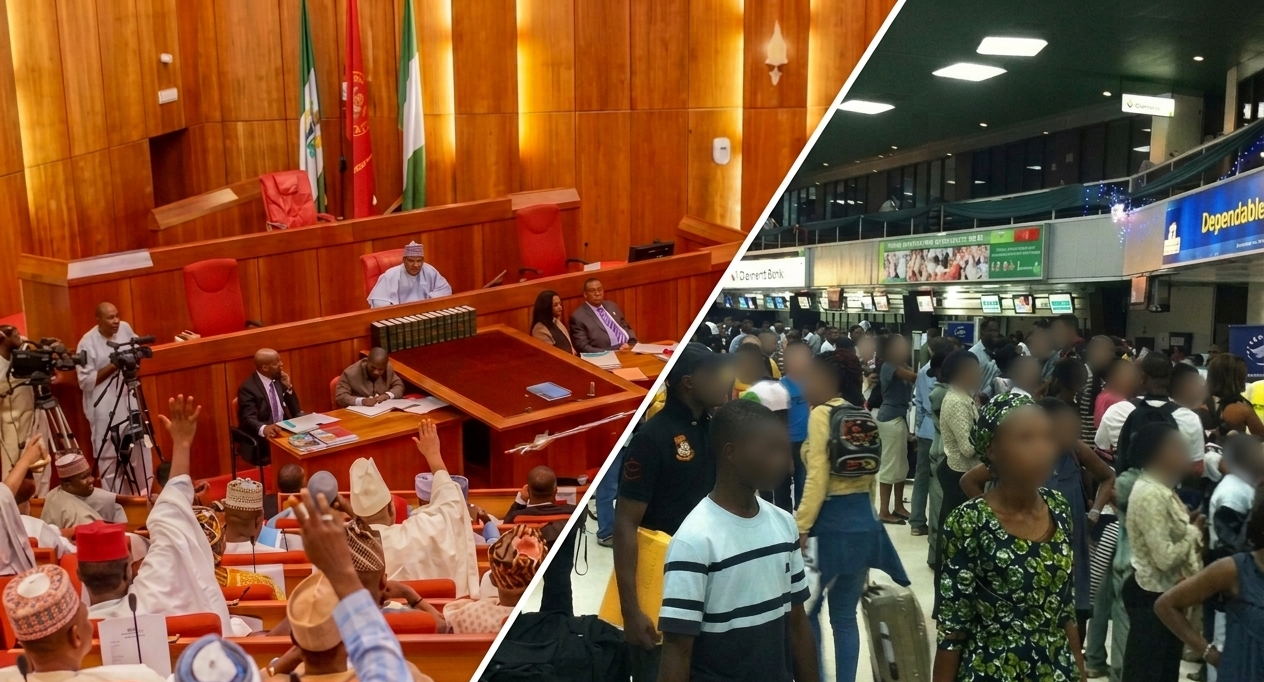
HOW NIGERIANS ARE THE WORST ENEMIES OF NIGERIA
For a long time, it has become common for Nigerians to blame the government for the country’s economic challenges, insecurity, and social problems. While it is true that government policies and leadership play significant roles in shaping the condition of a nation, Nigerians often overlook the many occasions when citizens themselves have failed to cooperate with government efforts aimed at improving the general wellbeing of the country.
There are several instances where Nigerians’ attitudes, actions, and behaviours have contributed to the failure of systems designed for national development. Consider the following examples:
a. Abuse and Rejection of the Coin System
When the government attempted to introduce the use of coins in line with what is practised in many developed economies, Nigerians failed to support the initiative. Some individuals abused the system by dropping ordinary metals into coin collection boxes as substitutes for real coins, while others refused to accept and use the coins in daily transactions. This eventually caused the government significant financial losses due to the cost of producing coins that were not properly utilised.
b. Disregard for Pedestrian Safety Measures
When zebra crossings were introduced to protect pedestrians crossing busy roads, many Nigerians failed to adopt the practice. Pedestrians often ignored designated crossing points because they considered them inconvenient or time-consuming, while many drivers refused to respect the rule requiring them to stop and allow pedestrians to cross safely.
Similarly, even where pedestrian overhead bridges have been provided as safer alternatives, many people still choose to cross directly on busy roads because it appears faster and easier. This disregard for safety measures has contributed to unnecessary accidents and loss of lives.
c. Challenges with Population Census
Nigeria has struggled to conduct a reliable population census for several decades. Whenever such exercises are carried out, the figures produced often become subjects of controversy because of allegations that population numbers are deliberately inflated for political and economic advantages. As a result, accurate planning and resource allocation for the country become difficult.
d. Electoral Malpractice and Poor Leadership Outcomes
Elections are meant to produce leaders based on the popularity and acceptance of candidates by the people. However, in Nigeria, electoral processes have often been affected by rigging, vote buying, and other forms of manipulation. Consequently, individuals who may not genuinely represent the wishes of the people sometimes emerge as winners and occupy positions where they make decisions on behalf of citizens without having earned true public confidence.
e. Poor Treatment of the National Currency
Government efforts to encourage Nigerians to handle the national currency with care have largely failed. Many Nigerians treat the currency carelessly, handling it in the same way old newspapers are crumpled and discarded. As a result, banknotes become dirty, damaged, and unpleasant to handle, sometimes even carrying unpleasant odours.
This poor attitude increases the frequency with which the government must replace damaged currency, creating unnecessary financial burdens that ultimately affect the economy and the people.
f. Disregard for the Law by Those Entrusted with Making Laws
One of the greatest contradictions in Nigeria is that some lawmakers and public officials are often among the biggest violators of the laws they create. They sometimes act with impunity, while ordinary citizens who commit similar offences face harsh consequences. This situation challenges the principle of equality before the law as guaranteed by the constitution and other legal frameworks.
g. Institutions Working to Protect Powerful Interests
The executive, legislative, and judicial arms of government have often been criticised for operating in ways that favour individuals in positions of influence rather than ensuring that justice is served equally. Instead of protecting the rights of every citizen, institutions sometimes appear to satisfy powerful interests rather than uphold the rule of law.
h. The Growing Danger of Criminal Activities
The way criminals operate freely in different parts of the country is no longer a hidden issue. The increasing level of insecurity presents a serious threat to Nigeria’s future. Unfortunately, many Nigerians have become accustomed to these dangers without fully recognising the long-term consequences they pose to national stability, development, and prosperity.
In conclusion, while government leadership remains a major factor in the progress or failure of any nation, citizens also have a responsibility in shaping the destiny of their country. A nation cannot develop when its people continuously reject, undermine, or fail to support systems designed for collective progress. The future of Nigeria depends not only on better leadership but also on a change in the attitudes and responsibilities of Nigerians themselves.